End of tenancy cleaning in London

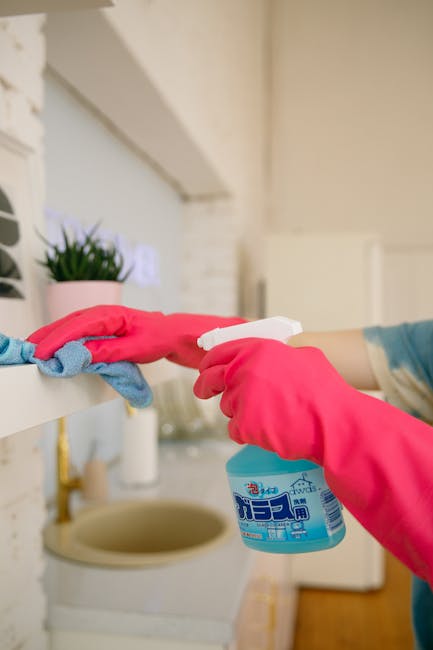
Our end of tenancy cleaning in London is designed for rented homes that need a careful, room-by-room clean before the next move. We focus on the areas that matter most at the end of a tenancy: kitchens that need degreasing, bathrooms that need descaling, living spaces that need dust removal, and bedrooms that need a thorough finish. The aim is to leave the property in a presentable condition that reflects a proper deep clean, rather than a quick surface tidy.
This service is built around the practical demands of moving out. We clean visible surfaces, reachable fittings, and commonly handled touchpoints, and we pay attention to details that are easy to overlook when packing and shifting furniture. End of tenancy cleaning can also include more focused work in areas that tend to collect grease, limescale, or general build-up, depending on the layout and condition of the property. If you need a quotation, take a moment to review the service pages and then make an enquiry.
For many customers, the key decision is how much of the property needs specialist attention and whether any rooms need a more intensive clean than others. We can organise the work around the condition of the home and the time available before handover. If you are comparing cleaning options, the details on our end of tenancy cleaning page can help you see how the service is positioned, while the sections below explain the main tasks in more practical terms.
Kitchen and appliance cleaning
Kitchens usually need the most detailed work at the end of a tenancy, because cooking residue settles on more than just the obvious surfaces. We clean cupboards externally, wipe accessible shelves, degrease splashback areas, and work around sinks, taps, and worktops so the room presents well when the property is inspected. Where relevant, we also give attention to the build-up that can collect around handles, extractor housings, and tiled surfaces.
Appliance cleaning is often a central part of the service. Ovens, hobs, and other kitchen units can accumulate stubborn marks that benefit from a methodical approach rather than a quick wipe. When the condition allows, we focus on removing burnt-on residue, grease films, and debris around control areas and edges. What we clean will always depend on access, condition, and the spaces available around the unit, so the work can be tailored to the property rather than treated as a fixed checklist.
If you are planning a move-out clean, it helps to think in terms of the items that are most likely to affect the overall finish: cupboards, appliances, worktops, sinks, and floors. A careful kitchen clean does more than improve appearance; it creates a consistent result across the room. For a broader overview of related work, you can also look at our oven cleaning and deep cleaning pages if those services are relevant to your property.
Bathrooms, bedrooms and living areas

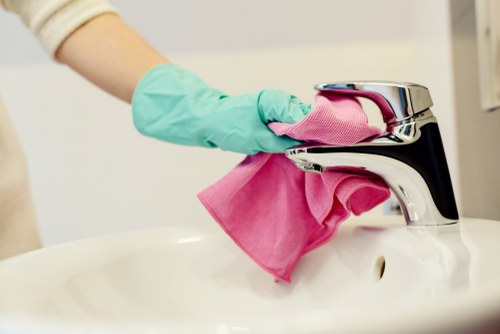
Bathrooms need a different approach because scale, soap residue, and moisture marks collect on fittings and tiled surfaces. We clean baths, showers, basins, toilets, and accessible bathroom furniture, paying attention to the points that are most likely to show wear. Descaling and sanitising-style cleaning methods are often useful here, especially where taps, screens, and tiles have visible build-up. The aim is a fresher room that looks properly attended to.
Bedrooms and reception rooms are usually less demanding than kitchens and bathrooms, but they still need a consistent finish. We dust skirting boards, reachable shelving, internal ledges, light marks on fixtures, and accessible surfaces that collect dust while a property is occupied. Floors are then dealt with according to the surface type, which may involve vacuuming, sweeping, or careful mopping. These rooms often benefit from a measured, tidy approach rather than heavy intervention.
Living spaces are also where small marks and overlooked corners become noticeable during a move-out inspection. We therefore pay attention to windowsills, door frames, radiators where accessible, and the edges of rooms that gather lint and dust. If you want a broader clean alongside the tenancy work, our one-off cleaning service and house cleaning page describe related domestic options that may be useful before or after the handover date.
Floors, fixtures and finishing touches
Flooring can make a large difference to how a property appears once the larger cleaning tasks are complete. Different surfaces need different treatment, so we do not assume one method suits every room. Hard floors may need careful mopping and attention to corners, while fitted carpets usually need vacuuming and a more thorough treatment where marks or trapped dust are present. The idea is to bring the rooms together as a coherent whole.
Fixtures and fittings are equally important because they catch the eye during an inspection. We clean reachable switches, sockets, handles, railings, trims, and similar touchpoints, taking care not to overstate what can be removed if a mark is permanent or if access is limited. In properties with built-in storage, the edges, shelves, and accessible internal sections may also need attention. The result should feel neat, controlled, and properly finished.
Some properties need a combination of tenancy cleaning and other specialist tasks, especially where the home has been occupied for a long period or has additional surfaces that require separate care. If you need help with fabric surfaces or hard floors, our upholstery cleaning and hard floor cleaning pages provide useful context. For rooms that only need a lighter refresh after the main clean, we can also discuss the most sensible scope for the booking.
How we plan the clean

Planning matters because end of tenancy work has to fit into the move itself. We usually start by understanding the property type, the number of rooms, and the areas that need the most attention. That helps us shape the clean around the actual condition of the home rather than relying on a generic routine. The more clearly the rooms and surfaces are described, the easier it is to estimate the workload sensibly.
When you request a quotation, it is useful to mention any especially busy areas, any heavy staining, and whether the property contains specialist fixtures that need careful handling. Photographs can help where the condition is not obvious, but they are most helpful when they show the relevant rooms clearly and from more than one angle. If access is limited or timing is tight, say so at the outset so the booking can be discussed realistically. Clear information helps us match the clean to the property.
For customers comparing costs, our pricing and quotes page explains how to approach an estimate, while the contact us page is the best place to send the details needed for a quote request. We avoid making assumptions about what a home requires until the basic information is known, because the size, condition, and fixture count can all affect the scope of the work.
Why tenancy cleaning often needs a fuller scope
End of tenancy cleaning is usually broader than routine domestic cleaning because the aim is to bring the whole property up to a more complete standard in one visit. That means attention to corners, edges, internal surfaces, and areas that are easy to miss in normal weekly cleaning. It may also involve moving through the property in a fixed order so that cleaned rooms are not re-soiled while other tasks are still underway.
The service is also more demanding because the work often has to cover rooms that have been used intensively right up to the departure date. Kitchens may need degreasing, bathrooms may need scale removal, and bedrooms may need a full dust and vacuum finish. In some homes, there may also be built-in storage, appliances, or fittings that require more careful handling than ordinary surfaces. A structured process helps ensure nothing obvious is left behind.
Where relevant, we can also discuss related cleaning needs that sit alongside the tenancy clean, such as a more detailed domestic refresh or attention to furnishings. Domestic cleaning and sofa cleaning may be useful if the property includes items that need separate care. These services are not a substitute for the main end of tenancy clean, but they can complement it when the home contains surfaces that need different treatment.
About London
London is the capital of the United Kingdom and one of its most layered urban landscapes, shaped by centuries of growth, rebuilding and adaptation. The City of London retains its historic core, while the wider city spread along the Thames includes boroughs with very different characters, from dense inner districts to more residential and green outer areas. The river remains a central thread in the city’s geography, with bridges, embankments and waterfront walks linking neighbourhoods across both banks. Architectural variety is one of London’s defining features: medieval fragments, Georgian terraces, Victorian streets, post-war estates and contemporary towers all sit within the same metropolitan fabric. Landmarks such as the Tower of London, St Paul’s Cathedral, Westminster Abbey and the Palace of Westminster reflect the city’s long political and cultural role, while places like the South Bank, Covent Garden and Camden show how commerce, leisure and performance continue to shape everyday life. London’s parks are also significant. Hyde Park, Regent’s Park, Hampstead Heath and Richmond Park offer large open spaces within the urban area, each with its own history and atmosphere. Museums, theatres, galleries, markets and music venues add further depth, making the city not just a centre of government and finance but also a place of neighbourhood identity and public culture. Transport has long influenced London’s development too, from its Underground network to mainline rail hubs and river crossings, which connect districts that would otherwise feel much more separate. The result is a city that is both unified and fragmented, where local streets and landmark districts sit side by side within a broad and ever-changing whole.
Rooms, access and practical preparation
There are a few practical points that make the clean easier to organise. If the property still contains belongings, it helps to know which rooms are clear and which ones are partly occupied, because that affects the sequence of work. Access to water, power, and the main rooms should also be straightforward on the day. Where there are fragile fittings, unusual surfaces, or items that must be left untouched, these should be identified before the visit so the clean can be planned properly.
It is also sensible to think about the condition of any appliances, cabinetry, and fittings that are being left in place. We can clean around many fixed features, but the results depend on how accessible they are and how much residue has built up. If a property includes glass, polished metal, or patterned surfaces, those details are worth mentioning because they can affect the method used and the time required. That keeps the quotation more grounded and the final scope clearer.
For a formal estimate, use the service pages to identify the type of work you need and then send the relevant details. A concise description is usually enough to begin with, and it can be followed up if anything needs clarification. If you are ready to request a quote, please use the contact us page and include the property size, the main rooms, and any areas that need extra attention.
Helpful related cleaning options
Some properties benefit from related services that sit near end of tenancy cleaning but are not identical to it. For example, carpets, upholstery, and ovens often need their own treatment when marks are more stubborn or when the item itself requires specialist attention. Choosing the right combination of services matters because it prevents a tenancy clean from being asked to do everything at once. That can lead to a better result and a clearer quotation.
The same principle applies to properties with different floor finishes or additional internal surfaces. A tenancy clean may cover general floor cleaning, but it does not always replace a dedicated treatment for hard floors, fabrics, or individual fixtures. When you are deciding what to include, think about the room as a whole and the items most likely to be inspected closely. That makes it easier to prioritise the work that will have the most visible effect.
Our carpet cleaning, rug cleaning, and office cleaning pages show the range of separate cleaning work available on the site. Office work is not the same as residential tenancy cleaning, but the link can still be useful if the property in question contains a study, workspace, or managed premises that needs another type of cleaning arrangement.
Making a quotation request
When you ask for a quotation, focus on the essentials: the property size, the room count, the surfaces involved, and any stubborn cleaning issues that are visible already. If you know the move-out date, mention it, because that helps with planning even when the exact time is still flexible. A well-described enquiry usually leads to a more useful estimate than a very brief request, particularly where the property has a mixed finish or includes specialist fixtures.
We also recommend keeping one point of contact responsible for the booking so that any questions can be answered quickly. If the property has been lived in heavily, or if a previous clean has not happened for some time, it is worth saying so directly. That does not mean every room needs the same level of treatment, but it does help shape a quotation that reflects the likely effort rather than assuming a standard case. Accuracy at the start makes the whole process easier.
For a direct next step, use the pricing and quotes page to understand the quotation route, then send your request through the contact us page. If you prefer to read more about the wider business first, the about us page is available, but the simplest way to move forward is to share the property details and ask for a quotation.
Completing the handover clean

End of tenancy cleaning is most effective when it is approached as a complete handover clean rather than a loose collection of tasks. That means each room is assessed for the surfaces and fittings it contains, the visible build-up is tackled in a sensible order, and the final finish is checked as a whole. Kitchens, bathrooms, floors, and high-touch areas usually matter most, but the overall standard depends on how consistently the work is applied throughout the property.
It is also important to keep expectations realistic. Some marks, wear, or damage may not respond to cleaning alone, especially where surfaces are aged or heavily worn. In those cases, the service can still improve presentation by reducing dirt and residue, but it should not be described as a repair solution. When the aim is a tidy, well-presented property ready for inspection, a careful clean can make a noticeable difference without promising more than the surfaces can deliver.
If you would like to arrange your clean, send the property details and request a quotation. We can then review the scope and discuss the most suitable options for the home. For related information, you may also want to look at our after builders cleaning page, especially if the property has recently had work carried out and needs a different kind of finish before handover.